
PS5 Pro in 2026: Specs, Price History, and Whether It’s Worth $899
PS5 Pro launched November 2024 at $699; now $899 after two price increases. Sony Interactive Entertainment.
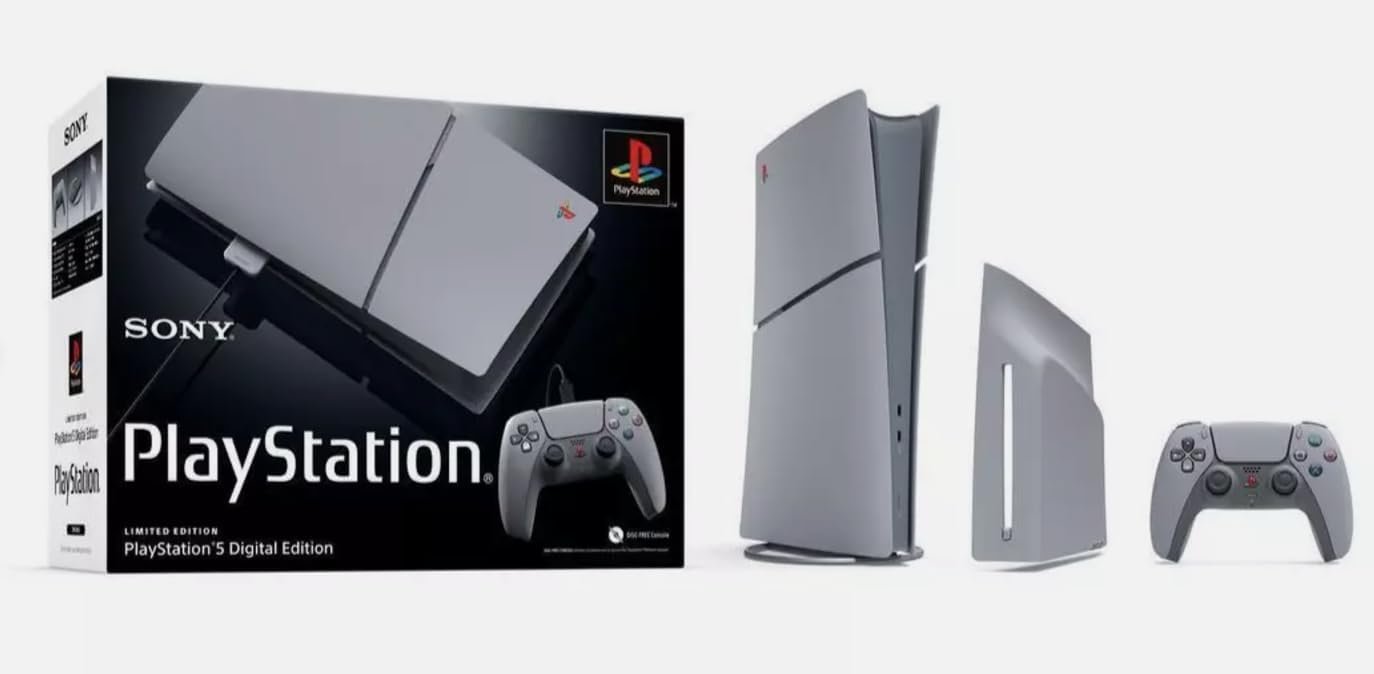
The PlayStation 5 Pro is the most powerful console Sony has ever shipped. It is also the most expensive mainstream console in recent memory. After two price increases in eighteen months, the digital-only Pro now retails at $899.99 in the US ; a $200 jump from its launch price. Here is what that money actually buys, how the hardware compares to the base PS5, and whether the upgrade makes sense for your setup.
Quick Specs Comparison
| Spec | PS5 / PS5 Slim | PS5 Pro |
|---|---|---|
| Launch date | Nov 2020 / late 2023 | Nov 7, 2024 |
| Current US price | $649.99 disc / $599.99 digital | $899.99 (digital only) |
| GPU compute units | 36 CUs | 60 CUs |
| GPU throughput | 10.28 TFLOPS | ~16.7 TFLOPS |
| Rasterization gain | Baseline | ~45% faster (Sony) |
| Ray tracing | Standard | 2–3× throughput |
| AI upscaling | No | PSSR / PSSR 2.0 |
| System memory | 16GB GDDR6 | 16GB GDDR6 + 2GB DDR5 |
| Memory bandwidth | 448 GB/s | 576 GB/s |
| SSD storage | 1TB | 2TB |
| Optical drive | Built-in (disc) / none (Digital) | None ; optional $79.99 add-on |
| Wireless | Wi-Fi 6E | Wi-Fi 7 |
Two Price Hikes in Eighteen Months
The PS5 Pro launched on November 7, 2024 at $699.99. Sony raised the price to $749.99 in August 2025, then again to $899.99 on April 2, 2026 ; a $150 increase the company attributed to rising global memory costs, per the official PlayStation Blog announcement. The base PS5 disc model went from $499.99 to $649.99 over the same period; the Digital Edition from $449.99 to $599.99.
According to Videogame Console Library pricing history, the PS5 Pro is the only mid-generation refresh to see two price increases within its first two years. The PS4 Pro (2016) and Xbox One X (2017) held their launch prices until successor hardware arrived.

PSSR 2.0 Actually Does
PlayStation Spectral Super Resolution is Sony’s answer to Nvidia’s DLSS. The original PSSR launched with the console; PSSR 2.0 rolled out via firmware in mid-2026, adding improved temporal stability and reduced ghosting in motion-heavy scenes. The upscaler reconstructs a 4K image from a lower native render ; typically 1440p or 1800p ; while maintaining 60 fps with ray tracing enabled.
According to Sony’s materials, compatible games can run at 60 fps, or up to 120 fps, with ray tracing and PSSR 4K reconstruction active simultaneously. Over 200 titles had Pro patches by mid-2026, though the quality of implementation varies. First-party games (Spider-Man 2, Horizon Forbidden West, The Last of Us Part I) show the cleanest results; third-party patches range from excellent (Alan Wake 2) to minimal (simple resolution bumps).
Ray Tracing and the 45% Rasterization Claim
Sony claims ~45% faster rasterization versus the base PS5’s 36-CU, 10.28 TFLOPS GPU. The 60-CU Pro GPU at ~16.7 TFLOPS delivers that uplift in synthetic benchmarks, but real-world gains depend on the game engine’s ability to saturate the extra compute units. Ray tracing throughput is 2–3× the base console, which translates to playable 4K/60 with RT on in titles that support it ; something the base PS5 rarely achieves without dropping to 30 fps.
“The PS5 Pro is unambiguously the better-performing console: 67% more compute units, roughly 45% faster rendering, up to 2–3× ray tracing, PSSR upscaling, double the storage and Wi-Fi 7.”
; Shattered.io comparison, October 2026
Who Should Buy (and Who Should Not)
- Buy the Pro if: You own a 120 Hz 4K display with VRR, play ray-tracing-heavy games (Alan Wake 2, Cyberpunk 2077, Hogwarts Legacy), want stable 4K/60 without fiddling with settings, or need the 2TB storage.
- Stick with base PS5 if: You play mostly at 1080p or 60 Hz, don’t care about ray tracing, already own a PS5 Slim, or want a disc drive included. The disc-ready Pro (console + optional drive + vertical stand) totals ~$1,010.
- Wait if: You are PC-curious. A $1,000 GPU (RTX 4070 Super / RX 7800 XT) beats the Pro in raw performance and gives access to the full PC library.
Enhanced Games Worth the Upgrade
Not every Pro patch is equal. First-party titles show the cleanest implementation: Spider-Man 2 adds a 60 fps ray-tracing mode with PSSR that holds near-native 4K; Horizon Forbidden West unlocks 120 Hz on supported displays; The Last of Us Part I runs at native 4K/60 with maxed settings. Among third-party games, Alan Wake 2 is the standout ; its Pro mode delivers 4K/60 with full path tracing, previously impossible on consoles. Cyberpunk 2077 and Hogwarts Legacy gain stable 60 fps with RT enabled. Call of Duty and EA Sports FC titles receive resolution bumps but no new performance modes. Check the official PlayStation Blog’s “PS5 Pro Enhanced” list before buying for a specific game.
Long-Term Value Considerations
The Pro’s 2TB SSD eliminates the near-certain storage upgrade most base PS5 owners face within a year. Wi-Fi 7 matters only if your router supports it and your ISP delivers multi-gigabit speeds. The optional disc drive ($79.99) and vertical stand ($29.99) push a disc-ready Pro to ~$1,010. If you buy physical games or play PS4 discs, factor that in. Resale value for the original PS5 Pro at $699 launch has held reasonably; whether the $899 unit follows the same curve depends on how long Sony keeps this price before a potential Slim revision.
The Disc Drive Situation
The PS5 Pro ships digital-only. The Ultra HD Blu-ray disc drive is a $79.99 separate accessory that has seen periodic shortages and resale markups well above MSRP. The vertical stand is another $29.99. A fully equipped Pro with disc drive and stand approaches $1,010 before tax.