
Metal Slug: 30 Years of Pixel Perfect Run and Gun Histor
The SV-001 Metal Slug tank and Marco Rossi ; 30 years of pixel art excellence. SNK Corporation.
On April 19, 1996, a Neo Geo MVS cabinet in Osaka lit up with a game that looked unlike anything else in arcades. The pixels were dense, the animations fluid, the humor absurd ; a soldier moonwalking while firing a heavy machine gun, a tank that could jump, enemies that surrendered and waved white flags. Metal Slug was not just another run-and-gun; it was a masterclass in 2D craft that would outlive its hardware, its original publisher, and multiple corporate bankruptcies. Thirty years later, the series spans 30-plus titles across arcades, consoles, handhelds, feature phones, and modern platforms. This is how a small team at Nazca Corporation built a franchise that still defines the genre.
The Nazca Origin: From Irem to Neo Geo
The story, according to developer interviews, begins before 1996. Key Nazca developers cut their teeth at Irem on GunForce II (1994), a side-scroller with vehicle mechanics that foreshadowed Metal Slug. When Irem exited the arcade business, according to industry records, Akio Oyama formed Nazca in 1994. They chose SNK’s Neo Geo MVS: a 24-bit system with massive sprite scaling, 4096 colors, and a devoted operator base.
The original Metal Slug (codenamed Super Vehicle-001) location-tested in late 1995. The prototype, per GameFAQs reviewers who saw early builds, was reportedly shorter, more somber, and lacked the series’ humor ; POWs were blue palette swaps firing bazookas from the tank. SNK mandated changes, notes the manual: lengthen for AES buyers, inject comedy, make POWs distinct item-droppers. The result launched April 19, 1996, states SNK records, and became an instant MVS hit.
Why Neo Geo Mattered
The MVS hardware let Nazca push sprite counts far beyond competitors. Each frame could display 380 sprites at 16×16 pixels with 15 colors plus transparency ; enabling dense bullet patterns, multi-jointed boss animations, and background parallax layers that moved independently. The AES home version was identical to the arcade board, a rarity that cemented Metal Slug as a system seller for SNK’s expensive console.
The Golden Trilogy: 1, 2, X, 3 (1996-2000)
Metal Slug 2 arrived February 1998, reports the release schedule, doubling the cast to four (Eri, Fio), adding the Camel Slug and transformation mechanics ; mummy mode being the most memorable. But it suffered severe slowdown, said arcade operators, when sprites crowded the screen.
Metal Slug X (March 1999) was SNK’s rebalanced edition: reworked enemy placement, new weapons (Iron Lizard, Drop Shot), fat transformation, mostly fixed slowdown. Many players, per forum archives, consider X the definitive version.
Metal Slug 3 (May 2000) is widely regarded, per retrospective reviews, as the series’ peak. Branching paths, multiple endings, Slug Mariner, Slug Flyer, Elephant Slug, zombie transformations ; more content than any prior entry. Japanese magazines reported, per archived issues, near-perfect scores; Famitsu gave 36/40. A single credit cannot see everything.
| Title | Release | Platform | Developer | Key Innovation |
|---|---|---|---|---|
| Metal Slug | Apr 1996 | MVS, AES, Neo Geo CD | Nazca | Foundational run-and-gun, SV-001 tank |
| Metal Slug 2 | Feb 1998 | MVS, AES | Nazca | 4 characters, Camel Slug, transformations |
| Metal Slug X | Mar 1999 | MVS, AES | Nazca | Rebalanced 2, new weapons, fat mode |
| Metal Slug 3 | May 2000 | MVS, AES | Nazca | Branching routes, multiple Slugs, zombies |
Bankruptcy, Playmore, and the Noise Factory Era (2001-2003)
October 2001: SNK declared bankruptcy. The original Nazca team disbanded. Kawasaki had launched Playmore (August 2001), which acquired SNK’s IP and became SNK Playmore in 2003. Development of Metal Slug 4 (March 2002) and Metal Slug 5 (November 2003) shifted to Mega Enterprise and Noise Factory ; former SNK staff from Sengoku 3 and Gaia Crusaders.
The shift showed, per contemporary critics. Metal Slug 4 introduced the Metalish Gauge scoring system ; a timer-based medal chase that divided purists. Metal Slug 5 brought the Slug Gunner and a darker tone but recycled assets heavily. Both felt like competent imitations. The MVS hardware was aging; by 2003, Atomiswave and NAOMI had surpassed it.
The original Nazca team understood that Metal Slug was about rhythm ; when to shoot, when to jump, when to rescue a POW. The later games added systems but lost that rhythm.
; Arcade historian Steven Santana, DualShockers retrospective (2016)
Platform Migration: Atomiswave, PS2, and Handhelds (2006-2010)
SNK Playmore moved the series to Atomiswave for Metal Slug 6 (February 2006), per official platform announcements. It added Ralf and Clark, a Weapon Stock System, Easy Mode, and the Rush Blaster, cites the press kit. The sprite resolution increased, per technical analyses by Digital Foundry, but some fans missed the MVS palette’s warmth.
Metal Slug 3D (June 2006, PS2) attempted a polygonal reboot. It was poorly received, per contemporary reviews: clunky controls, camera issues, loss of 2D readability. SNK reportedly buried it, per industry observers.
The DS got Metal Slug 7 (July 2008) ; 2D with new Slugs, Combat School (80 drills), dual-screen map. Metal Slug XX (December 2009, PSP) refined 7 for Sony’s handheld. These were the last traditional mainline entries for over a decade.
The Mobile Renaissance: Defense, Attack, Infinity (2014-2019)
After a four-year gap, Metal Slug Defense (April 2014, iOS/Android) pivoted to tower defense. It worked, per download metrics: 25 million downloads proved global mobile appeal. The pixel art translated perfectly to touchscreens, per developer postmortems on GDC Vault; gacha collection fit the massive roster.
Metal Slug Attack (February 2016) added deck-building, real-time multiplayer, Another Story lore. Metal Slug Infinity (June 2019, idle RPG) automated combat but kept visual fidelity. These games funded, per SNK financial reports, the IP’s survival and introduced Metal Slug to a generation that never saw an arcade cabinet.
Pixel Art as Brand Equity
Every mobile spin-out retained the original Nazca sprite style, per asset audits ; even when Tencent developed Metal Slug Awakening (2024) in Unity 3D, the promotional material led, per marketing assets, with pixel-art screenshots. The 1996 aesthetic is not nostalgia; it is the franchise’s visual identity. Modern SNK contracts mandate, per licensing terms, pixel-art fidelity for any licensed Metal Slug product.
The Modern Revival: Tactics, Attack Reloaded, Awakening (2024-Present)

2024 marked a turning point. Dotemu partnered with Leikir Studio for Metal Slug Tactics (November 2024) ; a tactical RPG on Switch, Steam, PS5, PS4, Xbox Series X/S. It translates run-and-gun into grid strategy: action points, cover, sync attacks, roguelike missions. Critics praised the faithful sprite work and smart genre translation, per Metacritic and OpenCritic aggregators.
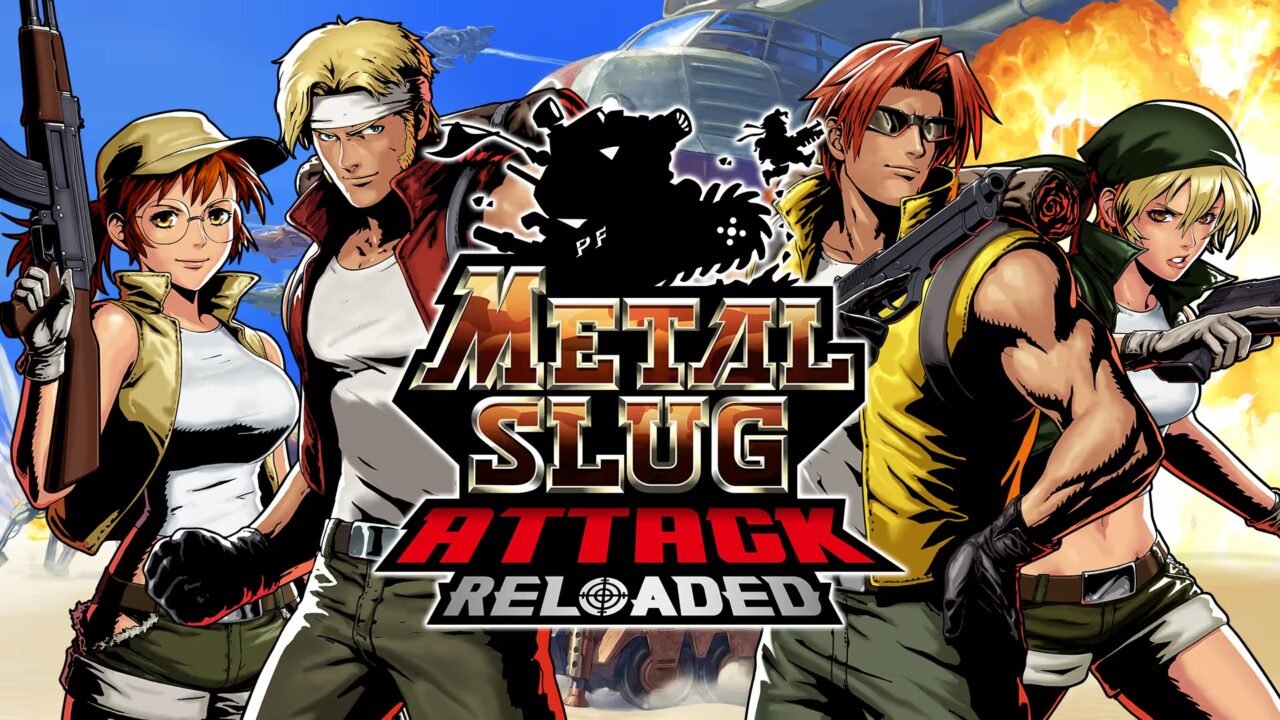
Metal Slug Attack Reloaded (June 2024) brought the mobile game to consoles/PC with rebalanced progression (no gacha), co-op, updated netcode. Metal Slug Awakening (July 2024, mobile) returned to side-scrolling with World Adventure, Three-Man Cell co-op, roguelike modes ; developed by TiMi Studio under SNK supervision.
SNK’s 30th anniversary site (launched April 19, 2026) frames this as a reboot, per the official site ; new games in development, dedicated social presence, retrospective video. The message, per SNK’s press release: Metal Slug is an active franchise, not a legacy IP.
| Era | Years | Key Titles | Developer | Platform Shift |
|---|---|---|---|---|
| Nazca / MVS Golden Age | 1996-2000 | 1, 2, X, 3 | Nazca | Arcade MVS, AES, Neo Geo CD |
| SNK Bankruptcy / Playmore Transition | 2001-2003 | 4, 5, Advance | Mega Enterprise + Noise Factory | MVS, GBA |
| Atomiswave / PS2 / DS / PSP | 2006-2010 | 6, 3D, 7, XX | SNK Playmore | Atomiswave, PS2, DS, PSP |
| Mobile Explosion | 2014-2019 | Defense, Attack, Infinity | SNK Playmore, Ekkorr | iOS, Android |
| Modern Multiplatform Revival | 2024-Present | Tactics, Attack Reloaded, Awakening | Leikir, Dotemu, TiMi/Tencent | Switch, Steam, PS5, Xbox, Mobile |
Key Figures Across Three Decades
| Name | Role | Era | Notable Contribution |
|---|---|---|---|
| Akio Oyama | Producer | 1996-2000 | Founded Nazca; greenlit Metal Slug |
| Takushi Hiyamuta (Hiya!) | Composer | 1996-Present | Iconic soundtracks; Metal Slug Theme motif |
| Eikichi Kawasaki | SNK Founder | 2001-Present | Founded Playmore; preserved IP after bankruptcy |
| Noise Factory Team | Developers | 2002-2006 | Metal Slug 4, 5, 6, 7, XX |
| Dotemu / Leikir Studio | Developer/Publisher | 2024 | Metal Slug Tactics (tactical RPG) |
| TiMi Studio (Tencent) | Developer | 2024 | Metal Slug Awakening (mobile action) |
Why the Pixel Art Still Holds
Thirty years later, Metal Slug sprites appear in design textbooks. Nazca animated walk cycles at 12 frames per second (double the era’s standard), hand-anti-aliased every edge, and designed silhouettes readable at 320×224. The SV-001’s suspension compresses frame-by-frame on landing; Marco’s bandana flaps with wind direction; boss weak points flash in rhythmic patterns that teach timing without tutorials. Modern pixel artists ; Celeste, Katana ZERO, Blasphemous ; cite Metal Slug 3 as a reference benchmark, per interviews.
Metal Slug has been running and gunning for the past three decades. SNK will continue to rise to the occasion, whatever it may be, to ensure the series will continue to meet fans’ expectations well into the future.
; SNK Corporation, 30th Anniversary Press Release (April 19, 2026)
Frequently Asked Questions
Which Metal Slug is the best starting point for new players?
Are the mobile games canon?
Why did the series switch developers after Metal Slug 3?
Is Metal Slug 3D worth playing?
What hardware do I need to play the original arcade versions today?