
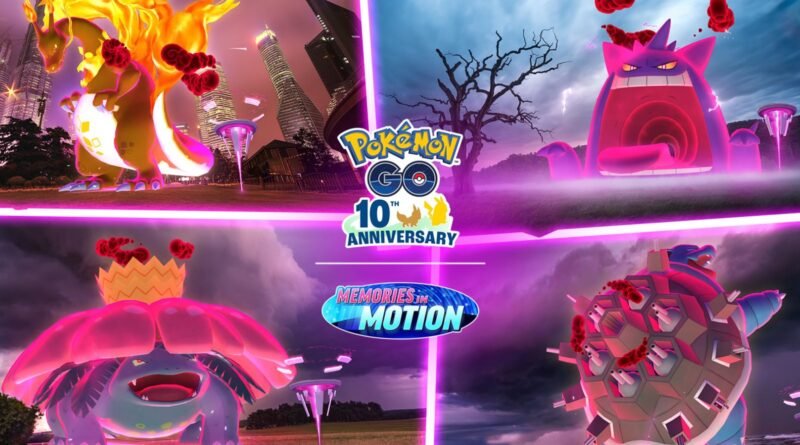
Pokémon Go: Still Kicking After All These Years? Let’s Dive In.
Remember 2016? Seems like a lifetime ago, doesn’t it? The world was suddenly obsessed with augmented reality, and all thanks to a bunch of little creatures called Pokémon. Pokémon Go wasn’t just a game; it was a global phenomenon. People were *everywhere*, glued to their phones, pointing them at lampposts and fire hydrants, convinced a Pikachu was hiding there. It was wild. And honestly? I was right there with everyone else, enthusiastically chucking Poké Balls at Pidgeys like my life depended on it. But the big question lingers: has the initial fever died down, or is there still something compelling about this AR adventure?
Let’s be real, the hype train of 2016 was a runaway locomotive. We saw news reports of people walking into traffic, trespassing on private property, and gathering in massive crowds in parks. It was a mix of hilarious, terrifying, and utterly captivating. But as with most things that explode onto the scene, the initial frenzy eventually calmed. The novelty wore off for many. Yet, here we are, years later, and Pokémon Go is still chugging along. Why? What keeps players coming back? Is it the nostalgia? The community? Or are the developers actually doing something right?
The Core Loop: Still Addictive?
At its heart, Pokémon Go is pretty simple. You walk around the real world, and your phone acts as a portal to find Pokémon. You encounter them, you battle them (sort of), and you try to catch them. This core mechanic, the simple joy of seeing a virtual creature appear in your actual environment, is undeniably powerful. It taps into that childhood dream of being a Pokémon Trainer, collecting them all. The sheer tactile satisfaction of flicking a Poké Ball just right, hearing that *’click’* and seeing the creature added to your collection? It’s pure dopamine.
But simple can get boring. Developers Niantic have understood this, and they’ve layered quite a bit onto that basic foundation. We’ve got Raids, where groups of players team up to battle powerful Pokémon. There are Gyms, those contested points where you can leave your Pokémon to defend or battle others. Then came the Research tasks, giving you specific objectives to complete for rewards, often including rare Pokémon encounters. Buddy Pokémon let you walk with your favorite creature to earn candy and other bonuses. It’s a constantly evolving ecosystem designed to keep you engaged.
Is it still addictive? For some, absolutely. The thrill of the hunt, especially for rare spawns or during special events, is a powerful motivator. I’ve definitely found myself going out of my way to hit a PokéStop that’s just a *little* too far on my usual route because a specific event is happening. The collection aspect is also a massive draw. We’re talking about hundreds of Pokémon now, spanning multiple generations. The completionist in me, that nagging little voice, whispers, ‘Just a few more… you’re so close to filling that Pokédex!’
Community and Social Connection: More Than Just a Game?
This is where Pokémon Go really shines, especially in its current iteration. Back in the day, it was a bunch of strangers milling about, awkwardly trying to coordinate Raid battles. Now? It’s a structured social experience. Finding local Discord servers or Facebook groups dedicated to Pokémon Go is super common. These communities organize meetups for Community Days, coordinate large-scale Raid battles, and share tips about spawns and strategies. It transforms the solitary act of walking around with your phone into a shared adventure.
I’ve personally experienced this. There was a time I was struggling to take down a particularly tough Raid boss. A quick message in my local group, and within minutes, several other players showed up. We high-fived (virtually, and sometimes physically!), strategized, and took the beast down together. That feeling of shared accomplishment, of being part of something bigger than yourself, is incredibly potent. It’s not just about catching digital monsters; it’s about the people you meet along the way.
The game actively encourages this. Features like trading Pokémon, sending gifts to friends (which often contain helpful items), and the ‘Best Buddy’ system all foster connection. You’re incentivized to interact with other players, to build friendships (both in-game and IRL). It’s a clever design choice that combats the isolation that can sometimes come with mobile gaming. Plus, who doesn’t love getting a surprise gift from a friend containing a bunch of useful potions?
Events, Updates, and Keeping Things Fresh
Niantic isn’t exactly known for resting on their laurels. Pokémon Go sees a steady stream of updates and, more importantly, events. Community Days happen monthly, spotlighting a specific Pokémon with increased spawn rates, exclusive moves, and bonuses for catching. Then there are larger seasonal events, GO Fests, Spotlight Hours, and themed celebrations tied to the real-world Pokémon anime or games. These create natural ‘pulls’ back into the game.
These events serve multiple purposes. They re-introduce older players to the game, give current players something exciting to focus on, and provide opportunities to catch Pokémon that might otherwise be incredibly rare. They also often introduce new mechanics or Pokémon, keeping the meta-game evolving. Think about it: a new Mythical Pokémon is released, and you *have* to complete a Special Research quest line to get it. That’s a compelling reason to log in daily, right? It’s a smart strategy to maintain player engagement.
Beyond the big events, there are constant quality-of-life improvements. Inventory management gets tweaked, new avatar items are added, and the AR features are occasionally enhanced. While not always headline-grabbing, these smaller updates contribute to a smoother, more enjoyable experience. It shows the developers are listening, even if it takes a while sometimes. Remember how clunky the gym system used to be? It’s come a long way.
The AR Experience: Evolving or Stagnant?
Augmented Reality was the hook, the ‘wow’ factor that made Pokémon Go explode. Seeing a Charmander sitting on your actual desk, or a Squirtle chilling in your bathtub? That’s undeniably cool. The ‘AR+’ mode, which places Pokémon more realistically within your environment and allows you to get closer for better photos, was a significant step up. The ability to take those perfect screenshots, framing a beloved Pokémon against a real-world backdrop, is a major draw for many players, myself included. It makes the world feel a bit more magical.
However, let’s not pretend the AR hasn’t had its hiccups. Early on, Pokémon would occasionally glitch and float away, or appear embedded in the ceiling. Performance could be spotty, especially on older devices. While improvements have been made, the AR hasn’t necessarily seen the kind of rapid, mind-blowing advancements we might have expected five years ago. It still feels more like a neat gimmick than a fully integrated, game-changing technology for the *entire* experience.
That said, Niantic is constantly experimenting. GO Snapshot allows you to summon any Pokémon in your collection for an AR photo session, anywhere, anytime. This feature alone has legs. It encourages creativity and provides a persistent way to interact with your favorite creatures beyond just catching them. It’s a reminder that the game isn’t *just* about the grind; it’s also about appreciating the Pokémon themselves. I’ve got some truly ridiculous photos saved – a Snorlax blocking my doorway, a Magikarp flopping on my carpet. It’s silly, but it’s fun.
The Downsides: What Still Grinds My Gears?
Okay, full transparency time. Pokémon Go isn’t perfect. Far from it. The biggest hurdle for many players, especially those outside of dense urban areas, is **access**. PokéStops and Gyms are clustered in populated areas. If you live in a rural location, the game can be incredibly sparse, often devoid of anything interesting to do or catch. This has been a persistent complaint since day one, and while Niantic has made some efforts to address it (like allowing players to submit new PokéStop suggestions), the disparity remains significant. It’s frustrating to see friends in the city constantly bombarded with opportunities while you’re lucky to find three PokéStops within a 20-minute drive.
Then there’s the **grind**. For players aiming for that 100% Pokédex completion or maxing out their Pokémon’s stats, the game can become incredibly repetitive. Farming for candy, stardust, and specific Pokémon can feel like a chore, especially when RNG (Random Number Generation) isn’t on your side. You can play for hours and still not find that one specific Pokémon you need. It requires a significant time investment to reach the higher echelons of the game, which can be a barrier for casual players.
Finally, **performance issues** and **battery drain** are perennial problems. The game is notoriously power-hungry. Expect your phone battery to plummet faster than a Magikarp trying to learn Fly. While external battery packs are common among dedicated players, it’s still an annoyance. And occasional server lag or app crashes during crucial moments (like a Raid battle!) can be infuriating. It’s the digital equivalent of fumbling the ball right before the touchdown.
Who is Pokémon Go For Now?
So, is Pokémon Go still worth playing in [Current Year]? My take? Absolutely, but with caveats. It’s not the wild, unpredictable AR playground it was in 2016. It’s become a much more structured, community-focused experience. If you’re looking for a game that encourages you to get outside, walk around, and connect with other people, it still delivers. The social features are robust, the events provide regular excitement, and the core collecting mechanic remains satisfying.
It’s fantastic for families wanting a shared activity. It’s great for people who enjoy light exercise combined with a sense of progression. It’s brilliant for those who have nostalgia for the Pokémon franchise and want to relive those feelings in a new way. The sheer volume of content and the constant updates mean there’s almost always something new to do or chase.
However, if you live in a rural area with few PokéStops, your experience might be limited. If you’re looking for a deep, complex RPG with intricate combat, this probably isn’t it. And if you have absolutely zero interest in Pokémon as a franchise, the appeal might be lost on you. But for the vast majority of people who have even a passing fondness for Pikachu and friends, Pokémon Go offers a surprisingly enduring and enjoyable experience. It’s evolved, matured, and found its niche.
So, there you have it. Pokémon Go isn’t just a relic of 2016’s augmented reality craze. It’s a living, breathing game that has successfully adapted and survived by focusing on community, consistent updates, and that timeless appeal of catching ’em all. It’s a testament to the enduring power of a beloved franchise and the surprisingly effective blend of real-world exploration and digital interaction. It might drain your battery, and it might not be perfect for everyone, but for millions, it’s still a reason to step outside and explore.
Are you still playing? Or did you jump back in recently? I’d love to hear your experiences. Drop a comment below – let’s keep the conversation going! Maybe we can even coordinate a remote raid sometime. You never know who might be listening…