
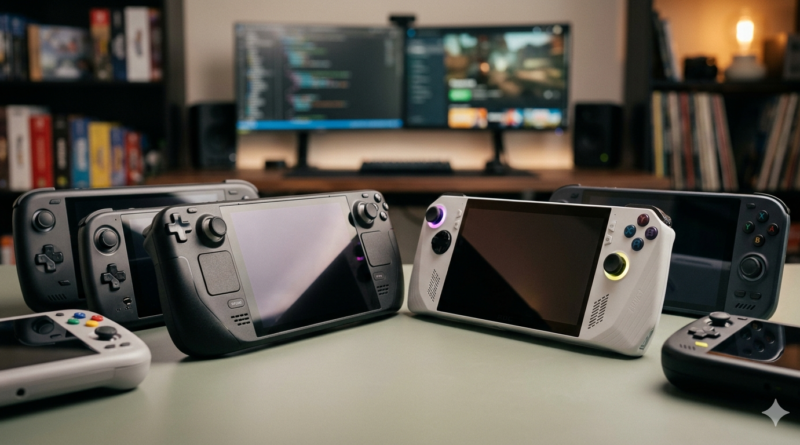
The Best Handheld Gaming Consoles in 2026
Alright, let’s talk about the future of gaming, or at least, the most portable slice of it. We’re in 2026, and the dream of carrying your entire PC game library in your hands is no longer a distant fantasy. It’s a reality, and it’s gotten incredibly competitive. For years, the idea of a true, powerful handheld PC has been dangled, but it often felt like a compromise. Now? We’re spoiled for choice. The titans, Valve’s Steam Deck and ASUS’s ROG Ally, have paved the way, but they aren’t the only players vying for your attention (and your wallet). We’re going to break down what makes these devices tick, who they’re best for, and what other contenders are making waves. If you’re thinking about diving into the world of portable PC gaming, or upgrading your current setup, you’ve come to the right place. Let’s get into it.
Valve’s Steam Deck: The Established Champion
Valve’s Steam Deck arrived with a bang, and honestly, it still holds its ground remarkably well. It’s the device that truly kicked open the door for mainstream handheld PC gaming. What makes it so enduring? For starters, its tight integration with Steam. If your lifeblood is Valve’s digital storefront, the Deck feels like a natural extension of your PC. It’s designed from the ground up to run SteamOS, a Linux-based operating system that, while sometimes requiring a bit of tinkering for non-Steam applications, offers a slick, console-like experience for its primary purpose. Navigating your library, launching games, and managing downloads is incredibly intuitive on the Deck’s interface. It genuinely feels like a dedicated gaming device, not just a PC crammed into a portable shell.
Performance-wise, the Steam Deck’s custom AMD APU (Zen 2 CPU and RDNA 2 GPU) is no slouch. It’s optimized to run a vast majority of PC games at playable frame rates, especially if you’re willing to tweak settings for older or more demanding titles. Valve has also been diligent with software updates, improving performance, adding features, and expanding compatibility. The trackpads are a standout feature, offering surprisingly accurate mouse control for games that don’t natively support controllers, which is a huge win for RTS or point-and-click adventures on the go. The ergonomics are also generally praised; it feels substantial and comfortable for longer play sessions, though its weight might be a minor concern for some. The battery life, while often cited as a weak point, is respectable for its class, usually offering 3-8 hours depending on the game’s intensity. It’s the all-rounder, the device that proved the concept and still delivers a fantastic experience for its target audience.
Steam Deck Pros:
- Excellent Steam integration and user-friendly interface.
- Versatile controls, including precise trackpads.
- Strong community support and ongoing software updates.
- Comfortable ergonomics for extended play.
- Access to a massive PC game library.
Steam Deck Cons:
- Linux-based OS can be less compatible with some non-Steam applications or anti-cheat software.
- Screen resolution and brightness are not top-tier compared to newer competitors.
- Can feel a bit bulky for some users.
ASUS ROG Ally: The Windows Powerhouse
Enter the ASUS ROG Ally. If the Steam Deck is the console-like experience, the ROG Ally is the full-fledged Windows PC in your hands. This is its greatest strength and, at times, its most significant hurdle. Running Windows 11 means you have unfettered access to virtually any PC game launcher or application you can think of – Steam, Epic Games Store, Xbox Game Pass, GOG, Battle.net, you name it. This universal compatibility is a massive draw for gamers who have libraries scattered across multiple platforms. No workarounds, no Proton tricks; just install and play.
Under the hood, the ROG Ally boasts AMD’s Z1 Extreme processor, which often edges out the Steam Deck in raw performance benchmarks, especially in graphically intensive scenarios. This translates to higher frame rates or the ability to push settings higher in many games. The display is also a significant upgrade: a 120Hz, 1080p IPS panel with VRR (Variable Refresh Rate) support. This makes games look incredibly smooth and reduces screen tearing, offering a visual feast that the standard Steam Deck can’t match. The design is sleeker, lighter, and feels more premium than the Deck, with comfortable grips and well-placed buttons. It also features a fingerprint reader for quick logins, a nice touch.
However, the Windows experience on a handheld isn’t always perfect. The user interface, designed for desktops, can be fiddly to navigate with touch or controllers, often requiring the use of the virtual mouse. ASUS’s own Armoury Crate SE software aims to streamline this, but it’s still a work in progress and can sometimes feel intrusive or buggy. Battery life is also a bit of a mixed bag; while it can offer similar playtime to the Deck in less demanding games, pushing that 120Hz screen and the more powerful Z1 Extreme processor can drain the battery considerably faster, sometimes leading to shorter sessions than expected. Despite these quirks, the ROG Ally is a formidable machine for anyone who needs the flexibility of Windows and wants the best possible visuals on a handheld screen.
ROG Ally Pros:
- Full Windows 11 compatibility for all launchers and applications.
- Superior display with 1080p resolution and 120Hz refresh rate.
- Higher raw performance potential with Z1 Extreme chip.
- Lighter and more premium feel.
- VRR support for smoother gameplay.
ROG Ally Cons:
- Windows interface can be cumbersome on a small screen.
- Battery life can be significantly reduced when pushing performance.
- Armoury Crate SE software can have occasional issues.
- Higher price point than the base Steam Deck models.
The Other Contenders: Who Else is in the Ring?
While the Steam Deck and ROG Ally dominate the conversation, the handheld PC gaming market is expanding rapidly. These aren’t just niche gadgets anymore. Let’s look at some other notable players that might tickle your fancy, offering different approaches or catering to specific needs.
AYANEO Devices: Premium Powerhouses
AYANEO has been a consistent innovator in the premium handheld PC space. They often push the boundaries with cutting-edge hardware, offering devices with high-resolution screens, top-tier processors (often the latest AMD Ryzen chips), and robust build quality. Their devices typically run Windows, giving them the Ally’s compatibility advantages. However, this premium positioning comes with a premium price tag, often significantly higher than both the Steam Deck and ROG Ally. They also tend to have a more limited production run and community support compared to Valve or ASUS. If money is no object and you want the absolute bleeding edge in a compact form factor, AYANEO is worth a look, but be prepared for the cost and potential quirks of a smaller manufacturer.
GPD WIN Series: Unique Form Factors
GamePad Digital (GPD) has been around for a while, experimenting with different handheld PC designs. The GPD WIN series often features a unique QWERTY keyboard built into the device, making them excellent for productivity or games that heavily rely on keyboard input. Like AYANEO, they run Windows and offer impressive specs for their size. Their form factor can be more cramped than the Deck or Ally, and battery life can be a trade-off for their compact nature. GPD devices are generally for a more niche audience who specifically wants that integrated keyboard or a particularly small form factor, and they also command a higher price.
Beyond these, you might see devices from brands like OneXPlayer, which often offer competitive specs and Windows compatibility, sometimes with even larger screens or unique designs. Each of these alternative devices often comes with its own set of pros and cons, usually revolving around price, build quality, specific hardware features, and the level of software support or community backing.
Making Your Choice: Steam Deck vs. ROG Ally vs. the Rest
So, how do you pick the right handheld gaming console in 2026? It really boils down to your priorities. Ask yourself these questions:
- What game launchers do you primarily use? If it’s almost exclusively Steam, the Steam Deck is a natural fit. If you’re spread across Epic, Xbox Game Pass, and more, the ROG Ally or other Windows handhelds offer seamless access.
- How important is visual fidelity and smoothness? The ROG Ally’s 120Hz 1080p screen is a significant advantage for many modern games.
- What’s your budget? The Steam Deck (especially the LCD models) often presents the best value for performance. Premium devices like AYANEO and GPD can cost double or more.
- Are you comfortable with occasional tinkering? If you enjoy diving into system settings or installing custom software, the Steam Deck’s Linux base might appeal. If you want plug-and-play simplicity with any PC application, Windows is king.
- How important are ergonomics and build quality? This is subjective, but try to find reviews that focus on comfort during long sessions.
The Steam Deck is the go-to for a streamlined, console-like PC gaming experience deeply tied to Steam. It offers incredible value and a robust platform that’s constantly improving. The ROG Ally is the choice for those who demand Windows compatibility, a superior display, and potentially higher performance, even if it means a slightly less polished handheld UI and potentially shorter battery life under load.
The other contenders, like AYANEO and GPD, cater to users who want specific premium features, unique form factors, or the absolute latest specs, and are willing to pay a significant premium for them. For most people looking to get into handheld PC gaming in 2026, the decision likely narrows down to the Steam Deck or the ROG Ally. It’s a fantastic problem to have, with two excellent, albeit different, options leading the charge.
Thinking about upgrading your current setup or making the leap into handheld PC gaming? The technology has never been better, and the competition ensures we’ll see even more exciting developments. Make sure you’re getting the best value for your money.
The Golden Age of Handheld PC Gaming Is Here
We’ve come a long way from the days of chunky portable consoles with limited libraries. The convergence of powerful mobile hardware and PC gaming has created a truly exciting segment of the market. Whether you lean towards the integrated ecosystem of the Steam Deck, the versatile Windows power of the ROG Ally, or the specialized offerings from other manufacturers, there’s a handheld gaming console in 2026 that can fit your needs. The key is understanding what matters most to you. With these powerful devices, your favorite PC games are no longer tethered to your desk. They’re ready to go wherever you are. Happy gaming!